Fig jam from Saga Prefecture: a short season, a specific fruit
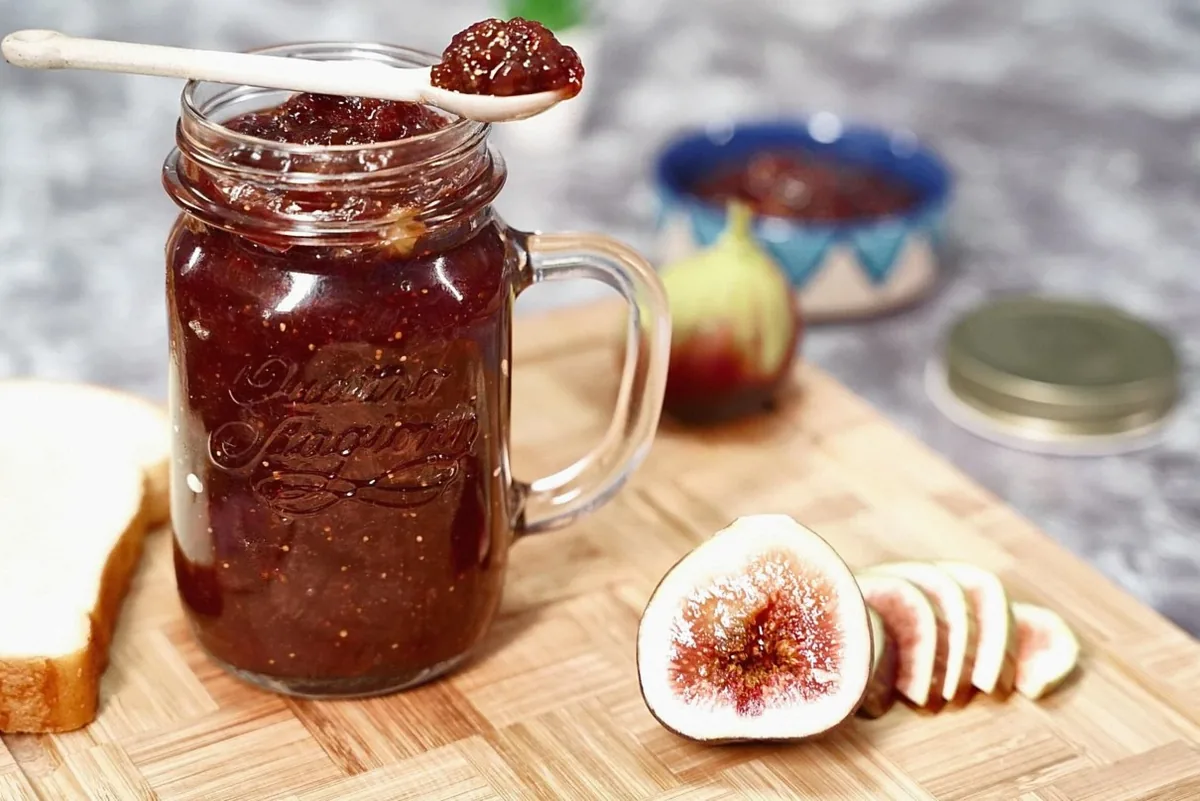
Figs are one of the more difficult fruits to work with in a jam kitchen. The season is short, the fruit deteriorates quickly after picking, and the pectin level is low enough that the set requires careful management. The reason to bother is the flavour, which is unlike any other fruit when cooked correctly.
Why Saga figs
Saga Prefecture has a warm, humid climate that suits fig cultivation. The variety grown most widely there is Masui Dauphine, a large, dark-skinned fig with a high sugar content and a deep, wine-like flavour when fully ripe. It is not a variety you see often in Tokyo supermarkets because it is too fragile to ship well, which is part of what makes it interesting for a local jam kitchen.
The harvest runs from late August through September, with a second smaller flush sometimes appearing in October. The window for jam-quality fruit is narrow: fully ripe figs need to be processed within a day or two of picking.
The pectin problem and how to work around it
Figs are low in pectin, which means a fig jam made without intervention will often set too softly or not at all. There are three approaches: add commercial pectin, add a high-pectin fruit (lemon juice or apple), or cook longer to concentrate the sugars to the point where they provide some structure.
Swift Kingdom uses lemon juice, added at the start of cooking. It contributes acid, which helps the small amount of natural pectin in the fig skins to activate, and it brightens the flavour without being detectable as lemon in the finished jam.
Black pepper: why it works
The fig and black pepper variety that appeared at the Fukuoka Craft Food Market in August is not a combination that sounds obvious. The reason it works is that black pepper's heat compounds (piperine) are fat-soluble, not water-soluble, which means they do not dissolve into the jam the way chilli heat would. Instead, the pepper adds a dry, aromatic warmth at the back of the palate that extends the fig's finish without competing with it.
The pepper goes in during the last two minutes of cooking, coarsely ground. Fine-ground pepper disperses too evenly and the effect is lost.
The fig and black pepper batch is the one that generates the most questions at markets and in emails. Whether it comes back in autumn 2026 depends on the Saga harvest, which is not yet confirmed.